


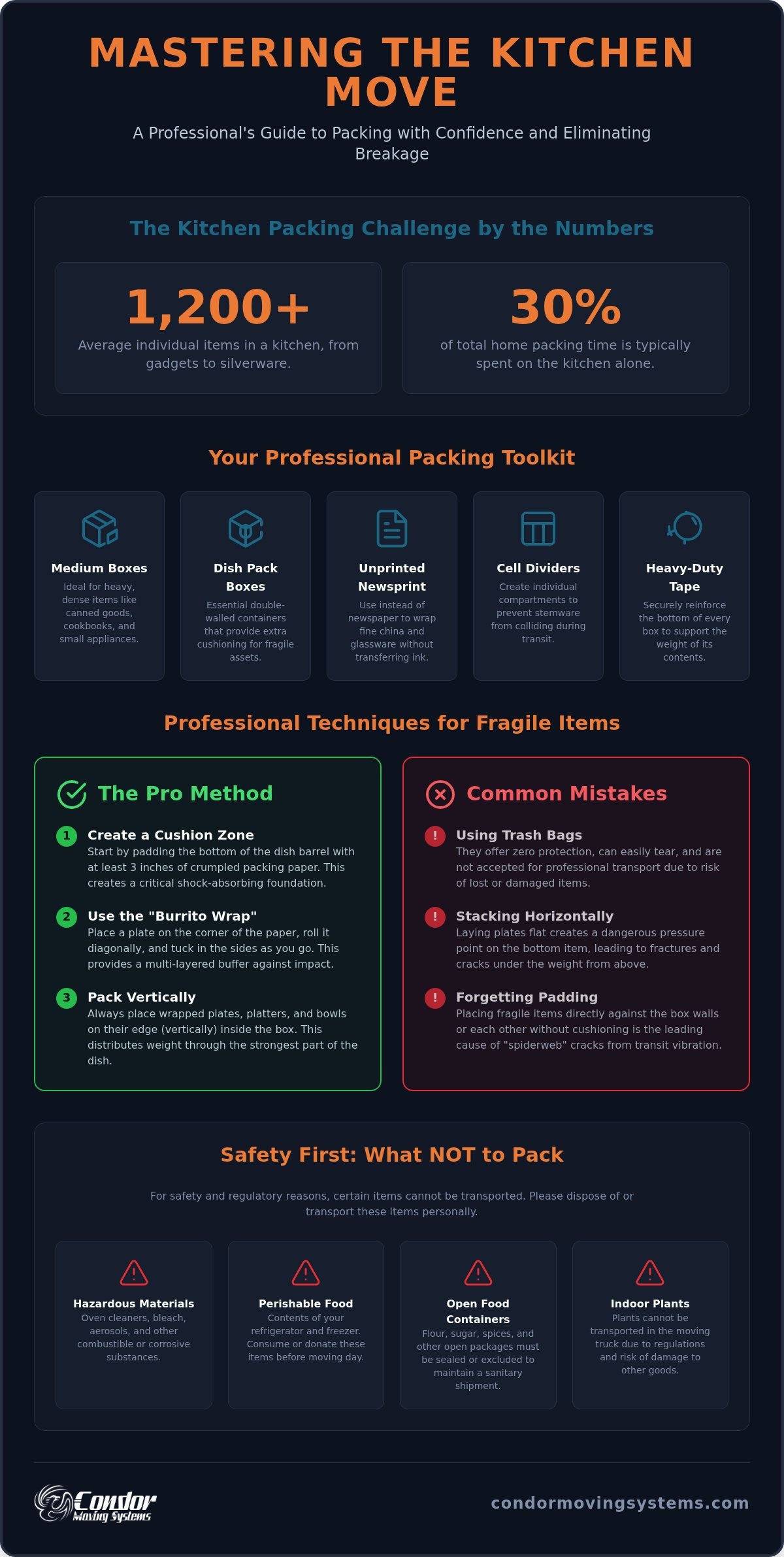
Did you know the average kitchen contains over 1,200 individual items and typically accounts for 30% of the total time spent packing a home? It’s a staggering volume that explains why learning how to pack kitchen for moving often causes the most relocation anxiety. If you feel overwhelmed by the sheer number of small gadgets or fear for the safety of your expensive china, you aren’t alone. Most people find the kitchen to be the most demanding part of their move because the stakes for fragile assets are so high.
Mastering your relocation requires a shift from casual wrapping to a disciplined, professional logistical strategy. We’ve compiled this 2026 guide to provide you with the exact techniques used by seasoned experts to eliminate breakage and streamline the process. You’ll learn how to implement a “last-in, first-out” inventory system, properly nest your cookware, and identify which hazardous materials must stay behind for safety. By following these structured steps, you can secure your belongings with total confidence and ensure your new kitchen is functional from the moment you arrive at your destination.
Key Takeaways
- Don’t use trash bags for packing; instead, secure specialized dish barrels and cell dividers to ensure your inventory is protected and eligible for transport.
- Protect fragile assets by using vertical packing and the “Burrito Wrap” technique, which significantly reduces the risk of impact damage compared to horizontal stacking.
- Streamline the transition by cleaning appliances and securing power cords properly to prevent unsightly scratches on stainless steel or plastic surfaces.
- Learn exactly how to pack kitchen for moving to maintain accountability and understand how the $0.60 per pound Released Value Protection applies to your shipment.
- Expedite your unpacking process by prioritizing heavy appliance placement and adhering to the 72-hour rule for reporting any logistical concerns.
Essential Supplies and Sorting Your Kitchen Inventory
Successful relocation starts with a methodical inventory audit and the acquisition of commercial-grade materials. When you’re determining how to pack kitchen for moving, the first step isn’t grabbing a box; it’s categorizing every item into “Keep,” “Donate,” and “Non-Allowable” groups. This process reduces the volume of your shipment and ensures only functional, safe items enter your new home. Whether you are utilizing our local moving services or preparing for a long-haul transition, this audit is your first line of defense against clutter.
Condor Moving Systems maintains a strict policy regarding packing materials to protect your investment. We don’t accept trash bags as packing containers for transit. These bags lack structural integrity and offer zero protection against impact, often leading to punctured items or lost inventory. Instead, we recommend using our professional moving kits, which are designed for the specific rigors of a kitchen relocation. These kits are available through our online store and include free shipping for those who prefer to manage their own packing.
The Kitchen “Must-Have” Packing Kit
Professional packing requires specialized equipment that goes beyond standard cardboard. Secure these items before you begin:
- Medium Boxes: These are ideal for heavy, dense items like canned goods, small appliances, and cookbooks.
- Dish Pack Boxes: These double-walled containers are essential for fragile assets. They provide extra cushioning against external pressure during the loading process.
- Unprinted Newsprint: Use this instead of standard newspaper to prevent ink transfer onto your fine china or glassware.
- Cell Dividers: These inserts create individual compartments within boxes, preventing stemware from knocking together during transit.
- Heavy-Duty Tape: Use high-quality packing tape to reinforce the bottom of every box, ensuring it can support the weight of kitchen staples.
Identifying Non-Allowable Kitchen Items
Safety regulations and company policy prohibit the transport of certain kitchen items. You must dispose of or personally transport hazardous materials such as oven cleaners, bleach, and aerosols. These substances pose a risk of combustion or leakage in a controlled transit environment. Our crews are also unable to move perishable food items; we advise you to consume or donate the contents of your refrigerator and freezer in the weeks leading up to your move. Finally, ensure that all open food containers and indoor plants are excluded from your packed inventory to maintain a sanitary environment for the rest of your household goods.
Step-by-Step Guide to Packing Fragile Glassware and Dishes
When mastering how to pack kitchen for moving, your primary objective is to mitigate the risk of pressure-based fractures. Fragile items like porcelain and crystal require more than just a single layer of paper; they need a structural environment that absorbs shock. Understanding how to pack kitchen for moving correctly means moving beyond basic wrapping and adopting industrial safety standards. This starts with the “Burrito Wrap” technique. Place a plate in the corner of a sheet of packing paper and roll it diagonally, tucking in the sides as you go to create a multi-layered buffer. Once wrapped, always place plates and bowls vertically in the box. Stacking them horizontally creates a dangerous pressure point on the bottom item, whereas vertical placement allows weight to be distributed through the strongest part of the dish. For a complete breakdown of this vertical packing method and other professional standards, see our detailed guide on how to pack dishes for moving.
Creating a “cushion zone” is the next vital step in securing your dish barrels. You should never place a fragile item directly against the bottom or sides of a box. Instead, fill these areas with crumpled paper or bubble wrap to create a soft perimeter. For stemware and delicate crystal, we utilize specialized cell dividers. these inserts prevent glasses from knocking against each other during transit, which is the leading cause of “spiderweb” cracks in fine glassware.
Professional Techniques for China and Glassware
Begin by padding the bottom of your dish barrel with at least 3 inches of crumpled packing paper. This creates a shock-absorbing foundation. When wrapping stemware, start by wrapping the base and stem first before moving to the bowl. This provides structural support to the thinnest part of the glass. For a deeper dive into protecting your most valuable assets, consult our Professional Fragile Item Packing Guide. If you find the volume of your glassware daunting, you can always request a quote for professional packing assistance to ensure total security.
When to Use Custom Crating
Standard cardboard boxes aren’t sufficient for every kitchen asset. High-value items like marble tabletops, antique chandeliers, or oversized glass display shelves require a rigid exterior that only custom crating can provide. Custom crating involves building a wooden frame tailored to the exact dimensions of the item, preventing any internal movement or external compression. Condor’s process includes precise measurement and on-site construction for these specialty kitchen assets. This ensures that even the most awkwardly shaped or heavy items remain immobile and protected throughout the entire duration of the move.
Securing Small Appliances and Large Cookware
While previous sections focused on fragile porcelain, small appliances and heavy cookware present a different set of logistical challenges. These items are often dense, awkwardly shaped, and mechanically sensitive. When you’re coordinating how to pack kitchen for moving, the priority shifts from impact protection to surface preservation and mechanical stability. Every appliance must be thoroughly cleaned and dried before it enters a box. Residual moisture or food particles can lead to mold growth during transit, especially if your items are moving into climate-controlled storage for any length of time.
Power cords require specific attention to prevent damage to the appliance’s finish. Instead of wrapping the cord tightly around the unit, which can stress the internal wiring, fold the cord neatly and secure it with a tie. Tape the cord to the side of the appliance or wrap it in a layer of packing paper to ensure the plug doesn’t scratch stainless steel or plastic surfaces. For large cookware, employ the nesting strategy to maximize space. Place smaller pots inside larger ones, ensuring a sheet of unprinted newsprint sits between each layer to protect non-stick coatings and polished finishes. Heavy stand mixers and blenders should be packed in their original packaging whenever possible; otherwise, use a heavy-duty box with a reinforced base to support the weight.
Pre-Move Appliance Maintenance
Successful relocation requires planning that starts days before the moving truck arrives. Refrigerators and freezers must be defrosting at least 24 to 48 hours before the scheduled pickup to ensure they are completely dry and free of ice. For microwaves, remove the glass turntable and wrap it separately in bubble wrap, as these are prone to shattering if left unsecured. Ensuring all small appliances are bone-dry is a critical step in maintaining professional hygiene standards throughout the move.
Packing the “Essentials Box”
The final step in your kitchen preparation is the creation of an “Essentials Box.” This container should hold everything you need for your first 24 hours in the new home, such as your coffee maker, a few sets of cutlery, and basic plates. Clearly label this box for “Last-On, First-Off” loading so it is the first thing unloaded from the truck. If you are coordinating a tight timeline, our Local Movers Texas team can provide guidance on managing these high-priority items during same-day service. By separating these daily necessities, you ensure a functional morning without the stress of searching through dozens of boxes.
Comparing DIY Packing vs. Professional Packing and Unpacking Services
Deciding between self-packing and hiring professionals depends on your timeline and risk tolerance. While you now understand the mechanics of how to pack kitchen for moving, the actual execution is incredibly labor-intensive. A professional crew typically packs an entire kitchen in three to five hours. In contrast, a DIY approach often stretches over several days, leaving you without a functional cooking space for nearly a week. If the full-service cost isn’t in your budget, partial packing is an excellent middle ground. You can hire experts specifically for the kitchen while managing easier rooms like the bedroom or living area yourself.
Hiring a carrier like Condor Moving Systems provides a layer of accountability that self-packing lacks. Boxes marked as “PBO” (Packed by Owner) carry a higher risk for the homeowner. Under federal law, movers are generally not liable for damage to items inside a box packed by the customer unless there is visible damage to the exterior of the carton. When our crews handle the packing, your items are covered under Released Value Protection, which provides coverage at $0.60 per pound per item. This ensures the responsibility for the safe arrival of your most fragile assets rests with the professionals. The same disciplined inventory and accountability standards we apply to residential kitchens are also the foundation of our professional office packing services, which help businesses maintain continuity during complex commercial relocations.
The Value of Professional Unpacking
Unpacking services offer a significant reduction in transition time. Instead of living out of boxes for weeks, you can have professionals place your inventory directly onto shelves and into drawers based on your preferences. We also handle debris removal, taking away all used boxes and packing paper so your new home remains clear of clutter. This service is especially vital for culinary professionals who require immediate business continuity and want to avoid the tedious details of how to pack kitchen for moving or unpacking it themselves.
Valuation vs. Insurance
You should distinguish between valuation and insurance before your move begins. Standard coverage is technically “tariff liability” or valuation. If you require Full Value Replacement Coverage, we recommend securing this through a third-party provider to ensure you’re compensated for the full cash value of any items. Regardless of the coverage level you choose, our personalized inventory tagging system creates a clear record of every carton. This ensures the complex task of how to pack kitchen for moving remains organized, documented, and fully protected from start to finish.
Settling Into Your New Kitchen: Unpacking and Logistics
The logistical precision required for how to pack kitchen for moving must extend into the delivery phase to ensure a seamless transition. Once the truck arrives, the focus shifts to verifying your inventory and establishing a functional kitchen workflow. It’s essential to have your payment ready in the correct format; Condor Moving Systems accepts only cashier’s checks, money orders, or Zelle at the time of delivery. We don’t accept cash, personal checks, or credit cards, so preparing this in advance prevents any delays in the unloading process.
Before the crew begins unloading, consider the accessibility of your new driveway. If a standard 18-wheeler cannot reach your entrance, we may need to implement a long-carry or shuttle service to transport your items safely. Once inside, prioritize the placement of heavy appliances and large cookware. Establishing these anchor points first allows you to organize smaller items and gadgets around them. We also maintain a strict 72-hour rule for reporting any service issues or missing items. This window ensures that any discrepancies are documented and addressed while the logistical details are still fresh.
Delivery Day Expectations
Our dispatch team provides a 24 to 48-hour delivery notification so you can prepare your space. As items enter your home, use your personalized inventory tagging system to verify each carton. This step is as critical as learning how to pack kitchen for moving because it confirms the chain of custody for your belongings. Our crews will re-assemble standard items they disassembled at the origin, though they don’t perform complex electrical or plumbing installations for kitchen appliances.
Long-Distance Kitchen Transitions
For those moving across state lines, transit times typically range from 1 to 10 business days depending on the distance and route. If your new home is undergoing renovations, we offer climate-controlled storage solutions to keep your kitchen inventory secure until you’re ready for delivery. You can explore our long-distance moves page for more detailed information on national relocation support. This structured approach ensures your most valuable assets are protected from the moment they leave your old kitchen until they’re safely placed in the new one.
Secure Your Kitchen Relocation Today
Transitioning your kitchen is a high-stakes logistical operation that requires more than just standard boxes and tape. By implementing the professional techniques outlined in this guide, from vertical plate alignment to the “Burrito Wrap” method, you significantly reduce the risk of damage to your most fragile assets. Mastering how to pack kitchen for moving ensures that your culinary tools arrive intact and ready for immediate use in your new home.
Condor Moving Systems brings over 20 years of Texas moving expertise to every relocation. As a Pinnacle Mover certified and fully licensed carrier (USDOT 1126171), we prioritize accountability and the safety of your inventory above all else. Our disciplined crews handle every detail with the precision of a seasoned service provider, providing you with total peace of mind from the first box to the final delivery.
We’re ready to provide the professional support you need for a stress-free transition. Your new kitchen is waiting; let’s get you there safely.
Frequently Asked Questions
Can I use trash bags for my kitchen towels and linens during the move?
No, trash bags are not accepted as packing containers for any household goods, including kitchen linens. These bags lack the structural integrity required to protect your items and can easily puncture or tear during transit. We require all items to be packed in professional moving boxes or our specialized moving kits. This policy ensures your belongings remain secure and organized throughout the relocation process in Dallas or Fort Worth.
Does Condor Moving Systems pack my pantry and refrigerator items?
Our crews do not pack or transport perishable food items, open containers, or refrigerated goods. For safety and hygiene reasons, you must consume or dispose of these items before your scheduled move date. If you’re relocating within Plano or Frisco, we recommend auditing your pantry weeks in advance. This ensures your shipment remains sanitary and complies with federal regulations regarding non-allowable items that could leak or spoil during transit.
What happens if a dish is broken during the move?
If you discover a broken dish, you should note the damage on the Bill of Lading at delivery and report the service issue within 72 hours. Standard coverage is provided through Released Value Protection, which offers $0.60 per pound per item. For high-value china, you may choose to purchase Full Value Replacement Coverage through a third-party provider. Our inventory tagging system helps document every carton to facilitate a clear claims process.
How much does it cost to have a kitchen professionally packed?
The cost for professional packing is based on the volume of your inventory and the specialized materials required for your fragile assets. We provide a free, no-obligation binding estimate that includes a guaranteed flat-rate quote tailored to your specific needs. Whether you are moving in Austin or Houston, our experts evaluate your kitchen’s requirements to provide a transparent price that covers the labor and equipment necessary for a secure transition.
Are there items in my kitchen that movers will not take?
Yes, our crews cannot transport hazardous materials such as oven cleaners, bleach, aerosols, or propane tanks. We also exclude perishable food, indoor plants, and high-value items like jewelry or cash from our shipments. Learning how to pack kitchen for moving involves identifying these prohibited items early. This ensures your move meets safety standards and prevents any delays during the loading process at your home in McKinney or Arlington.
How do I pay the final balance for my kitchen move at delivery?
You must pay the final 50% balance at the time of delivery using a cashier’s check, money order, or Zelle. We don’t accept cash, personal checks, or credit cards for the final payment stage. Having your payment ready in an accepted format ensures a smooth unloading process at your new residence in San Antonio or Irving. This protocol is part of our commitment to professional transparency and financial accountability for every client.
Do you provide boxes for my kitchen if I choose to pack myself?
We offer professional-grade moving kits and packing supplies through our online store, which include free shipping for all customers. These kits are specifically designed to help you master how to pack kitchen for moving by providing the dish packs and cell dividers necessary for fragile items. Using these commercial materials is the best way to protect your glassware and china if you prefer to manage the packing process on your own.
Can movers help me set up my refrigerator and stove in the new house?
Our crews will re-assemble standard components that they disassembled at the origin, but they do not perform complex electrical, gas, or plumbing installations. If you are moving to a new home in Southlake or Grapevine, you should arrange for a licensed technician to handle these connections. This ensures your appliances are installed safely and according to local building codes, providing you with total peace of mind in your new kitchen.