



The lowest quote isn’t automatically the right fit. For residential moving, choose a mover whose services match your route and workload, then compare quotes, customer reviews, licensing, insurance, schedules, charges, cancellation policies, and deposit requirements. Plan to book at least one month before your desired moving date.
It’s reasonable to want a clear plan before handing over the work of moving your home. The right service level depends on your route, how much help you need with packing and handling, and which tasks you prefer to manage yourself.
This guide explains how local and long-distance moves differ, what packing and full-service options can include, and which practical details to weigh when comparing movers. You’ll also learn how to prepare your home and timeline so the move stays organized from estimate through delivery.
Key Takeaways
- Compare movers on more than the quote: review the services, schedule, charges, cancellation terms, deposit requirements, licensing, and insurance.
- Match the service level to your move. Decide which packing, loading, unloading, and unpacking tasks you want handled and which you’ll manage yourself.
- Label boxes with their destination room and floor, and organize loose items before moving day to support a more orderly delivery.
- Plan ahead for different home layouts and access conditions, since parking and the path from the home to the truck can affect move logistics.
- For interstate moves, the Federal Motor Carrier Safety Administration says the 110% rule applies to charges collected based on non-binding estimates.
Local residential moving
For a local move, compare the service scope, timing, and work your household needs. A residential moving plan should account for the route, access at both homes, and the tasks you want handled.
Local and Intrastate Move Options
A local move stays within a nearby area, while an intrastate move travels within one state. For example, moving between Dallas and Austin stays within Texas, though the route covers substantial distance. A move from Texas to another state is an interstate, long-distance move. The origin and destination help determine which service fits.
Intrastate movers in the United States typically charge an hourly rate and provide loading and transportation services. The work involved can depend on the household’s belongings, stairs, access, and distance between the home and truck. When comparing quotes, make sure each describes the same tasks, such as loading, transportation, and any requested packing.
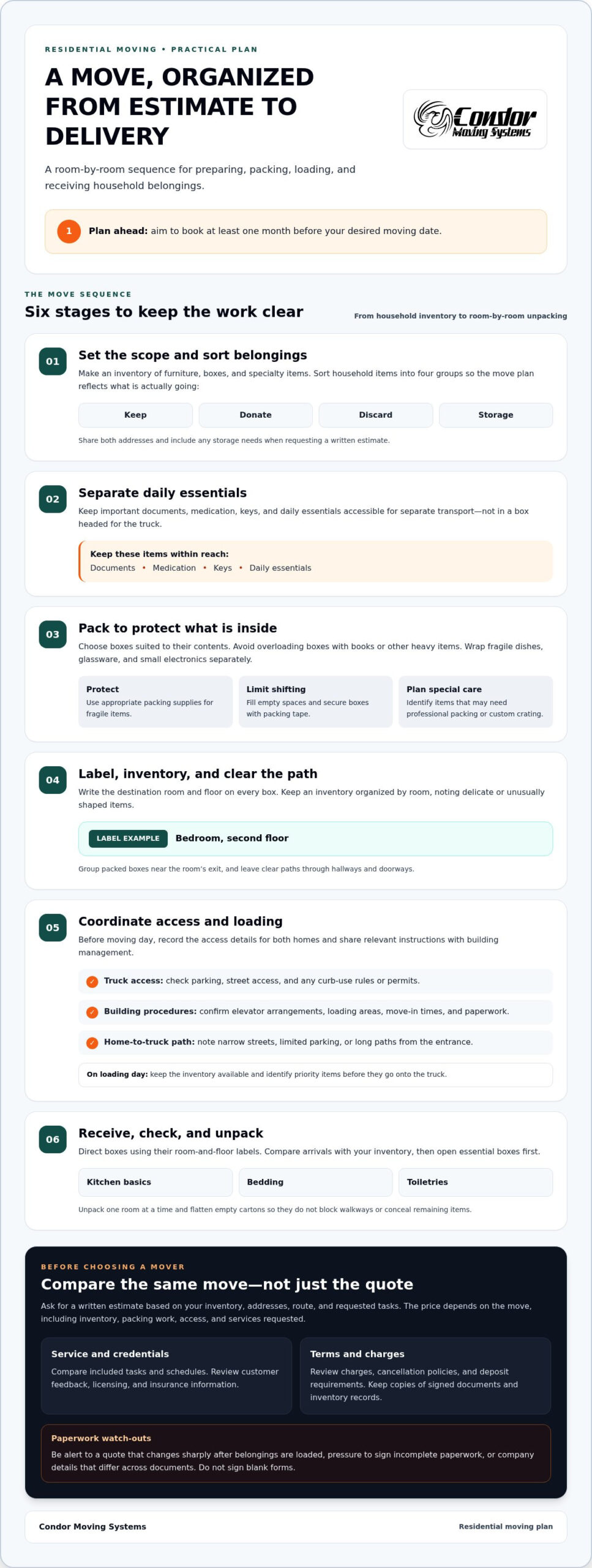
Ask for a written estimate based on the details of your move, not just a brief description of the destination. Prepare an inventory of furniture, boxes, and specialty items, and provide both addresses. If you need storage between homes, include that in the plan so the estimate reflects where items are going.
For local and long-distance moves, consider how much work you want professional movers from Condor Moving Systems to handle. A household that packs independently may need transportation and loading; another may need packing or storage as part of its residential moving plan. Compare schedules and included tasks alongside the route to choose suitable distance moving services.
Local Moving Requirements
Local requirements can include city parking permits or curb-use rules, as well as building procedures for elevators, loading areas, or move-in times. Ask the municipality about street access, and get the building’s instructions before setting the schedule. A downtown apartment may require a reserved loading area, while a house with a driveway may not.
Record the details in one move plan: truck access, entry instructions, elevator arrangements, and building paperwork. In a condominium or apartment, share the move date with management and follow its process. For a townhome or house, note narrow streets, limited parking, or long paths from the entrance to the truck.
Warning signs can include a quote that changes sharply after belongings are loaded, pressure to sign incomplete paperwork, or company details that differ across documents. Compare the written estimate with the mover’s identity and the agreed services. Keep copies of signed documents and inventory records, and don’t sign blank forms.
Before booking, compare customer reviews and written terms, including schedules, charges, cancellation policies, and deposit requirements. Check licensing and insurance information, and make sure the quote describes your actual inventory and addresses. These steps help you compare movers on the same basis, whether the move stays local or crosses Texas.
Packing, loading, unloading, and unpacking
A room-by-room packing plan keeps boxes identifiable from pickup through delivery. Before packing, sort household items into keep, donate, discard, and storage groups. This reduces unnecessary handling and gives movers a clearer inventory. Set aside important documents, medication, keys, and daily essentials for separate transport. Keep them accessible instead of placing them in a box headed for the truck.
Choose boxes suited to their contents, and avoid overloading them with books or other heavy items. Use appropriate packing supplies to protect fragile dishes, glassware, and small electronics. Wrap items separately, fill empty spaces to limit shifting, and secure each box with packing tape. Write the destination room and floor on every label. For example, mark a box “Bedroom, second floor” rather than simply “bedroom.”
Keep a simple inventory organized by room. Record box labels and note delicate or unusually shaped contents, such as a lamp or framed artwork. Pack loose items into containers, tape boxes securely, and group them near the room’s exit before moving day. Leave clear paths through hallways and doorways so belongings can be carried without navigating around unpacked items.
Packing services can help if preparing the household yourself doesn’t fit your schedule or items need careful handling. Professional packing and custom crating can protect belongings that need extra preparation. Decide which rooms or items need assistance, then separate them from boxes you plan to pack yourself. A clear division of tasks helps avoid duplicate packing and makes the loading plan easier to follow.
On loading day, keep the inventory available and identify priority items before they go onto the truck. At delivery, direct boxes by their room and floor labels, then compare arrivals with your inventory. Open essential boxes first, such as those with kitchen basics, bedding, and toiletries. Unpack one room at a time, flattening empty cartons as you go so they don’t block walkways or conceal remaining items.
The price depends on the move and is provided after a quote request; factors include the inventory, packing work, access, and requested services. To organize those details, list the rooms, furniture, fragile items, and packing tasks you want included, then request a moving quote based on that scope.
Full-service residential moving
A full-service move can combine transportation with selected preparation and delivery tasks. The exact scope depends on the work in the written estimate, so compare each task rather than relying on the label alone. One household may need packing and loading, while another may want help with furniture transport and unloading.
Before choosing, divide the move into stages: preparation, packing, loading, transport, unloading, and unpacking. Mark each stage “self-managed” or “mover-managed.” This simple list shows where professional help can reduce your workload and where you can handle tasks yourself. A family packing personal items but arranging furniture transport may need a different plan from a household requesting packing support throughout.
Ask what moving supplies are included in the estimate. Packing materials can include boxes, wrapping paper, protective padding, and tape, depending on the agreed service. If you’re packing yourself, group items by room and label each box with its destination. Mark kitchen boxes separately from bedroom cartons, and clearly identify fragile contents.
Custom crating may suit an item that needs a protective enclosure for transport, such as valuable artwork or an unusual piece of furniture. Identify the item before the move plan is prepared, and describe its size, shape, and handling needs. That information helps determine whether standard packing or a crate better fits the task. Keep removable parts, hardware, and assembly instructions together.
For moves in Dallas, Fort Worth, Arlington, Plano, Frisco, McKinney, Irving, Grapevine, or Southlake, consider both addresses and access at each property. A residence near downtown may have different truck access and building procedures from a home with a driveway outside the city center. Share the pickup and delivery addresses, entry instructions, stairs, and parking details when describing the move. This helps define the logistics, whether the route is local or longer.
Service coverage depends on the route and destinations a moving company handles, not only the neighborhood where a household starts. Compare the pickup location, delivery address, and any planned stop, such as storage. If belongings need separate handling, identify which items go to each destination. This helps you assess whether the proposed transport plan matches your household’s needs.
Full-service support can reduce your share of heavy lifting, but unloading and unpacking should still be clearly defined. Specify whether movers will place furniture in designated rooms, deliver boxes by floor, or unpack selected items. The estimate depends on the move, including inventory, packing, access, route, and requested tasks. A room-by-room scope makes estimates easier to compare and the plan more organized.
House, apartment, condominium, and townhome moves
Each home layout affects how movers access belongings, carry furniture, and load the truck. A detached house may offer driveway access, while an apartment may require shared entrances, elevator coordination, or stair carries. Before setting a moving date, map the route from each room to the truck. Note narrow turns, locked doors, and any long outdoor path.
For an apartment or condominium, get the building’s move procedures and schedule in writing. Record elevator reservations, loading-area instructions, entry arrangements, and allowed move times. A townhome may have stairs between floors or limited curb access; identify those conditions before preparing an inventory. For a house, note gates, steps, and large items that need a clear path.
Plan early. Book a residential move at least one month before your desired date. An in-home estimate may be needed for a home that is 1,500 square feet or larger. It may also help when movers could have difficulty parking a 26 ft. truck close to the home. Share access details and the household inventory so the estimate reflects the actual layout.
Stairs and tight hallways affect how teams handle furniture. Measure doorways and large pieces, such as beds, sofas, and dining tables, before moving day. Identify removable legs or shelves, and keep hardware together in a labeled bag. Clear hallways, landings, and entryways so movers can carry belongings safely without navigating around loose items.
If your move dates don’t align, storage can bridge the gap between homes. Separate items needed immediately from belongings going into storage, and label each group by destination. For example, keep daily kitchen supplies accessible while storing seasonal furniture. A written inventory helps track which items are going to the new home and which are staying in storage.
An international household move involves a cross-border route and destination-specific arrangements. A domestic moving plan shouldn’t be assumed to cover those added logistics. Organize an item inventory, origin and destination details, and timing early. For local moves, focus on property access, loading, transport, and delivery to the next home.
Office and commercial moves involve workspaces, equipment, and business operations, rather than household rooms and personal belongings. Keep those requirements distinct when planning a home relocation. For either move type, review the written estimate, schedule, charges, cancellation terms, and deposit requirements. Also review the mover’s licensing, insurance, and coverage terms so you understand how belongings are protected during transport.
Long-distance moving
A long-distance move needs a coordinated plan for inventory, loading, transport, and delivery. Route distance, access at both homes, and delivery timing shape that plan.
Long-Distance Delivery Windows
Ask how the delivery window works and how it relates to pickup. A window gives you a planning range rather than one exact arrival time. Build that range into travel, lodging, utility setup, and key collection. If you’re leaving Georgia before your belongings arrive, arrange essentials separately and keep documents, medication, and daily necessities with you.
Share fixed commitments at the destination, such as a lease start or building move-in appointment. Record the agreed pickup and delivery expectations in your move documents. Note whether someone must meet the movers, provide entry instructions, or reserve a loading area. A clear plan helps coordinate your household’s arrival with the shipment.
Interstate Moving Options
An interstate move crosses state lines, such as a relocation from Texas to another state. A move between Texas cities remains intrastate, even when the route covers substantial distance. Identify the origin, destination, shipment inventory, and requested services before comparing estimates. Those details help distinguish an interstate plan from a local or intrastate move.
According to the Federal Motor Carrier Safety Administration, interstate movers listed by Moving.com agree to follow the 110% rule when collecting charges based on non-binding estimates. Read the estimate and move documents carefully, noting whether the estimate is binding or non-binding. Keep the paperwork available during loading, and retain copies of the inventory and signed agreements.
Prepare an inventory describing furniture, cartons, and specialty belongings. Separate items traveling with you from those loaded for transport. Mark boxes by destination room, and identify items requiring careful handling before the crew begins loading. At delivery, use the inventory to track belongings and direct boxes to the correct rooms.
Compare long-distance estimates using the same shipment details and service scope. Review pickup timing, delivery window, loading and unloading responsibilities, included packing tasks, and any planned storage. The price depends on the move and is provided after a quote request; factors include distance, inventory, access, and requested services. Clear information makes estimates easier to compare without focusing on a single number.
Before confirming a schedule, coordinate departure, arrival, and access at both addresses. Keep contact details, move documents, and essential items together during travel. If you’re planning a move across state lines, review long-distance moving options and prepare the shipment details for an estimate.
Condor Moving Systems: Local Moving Services
Condor Moving Systems provides local and long-distance moving services for households. If you need help preparing belongings, professional packing and custom crating can protect items that need extra care during transport.
Share the details that shape your move, including both addresses, household inventory, access conditions, and the tasks you want handled. Note whether you need packing support, have specialty items, or are planning a local move rather than an interstate relocation. Clear information helps define the service scope and organize the move.
If your move involves an office or commercial space rather than a home, Condor Moving Systems also provides office and commercial moving. Contact the company to discuss your moving needs.
Set Your Move in Motion
Your next step is to turn your moving priorities into a clear plan. Decide what you want handled, what you’ll prepare yourself, and which details could affect access or delivery. This gives you a practical starting point for discussing your household’s needs and shaping a residential moving plan around your route and workload.
Condor Moving Systems offers Local Moving Services and Long-Distance Moving Services for household relocations, as well as Office and Commercial Moving for businesses. Share your origin and destination, preferred timing, inventory, and the help you need. With those details in hand, you can focus the conversation on the move rather than sorting out the basics later.
A considered plan makes it easier to approach moving day with clear responsibilities and priorities. Take the next step when you’re ready.
Frequently Asked Questions
How do I pick the right mover?
Choose a mover whose written estimate matches your inventory, route, and requested tasks. Compare customer reviews, licensing, insurance, schedules, charges, cancellation policies, and deposit requirements. Confirm who will handle the move and make sure the agreement identifies the responsible service provider. For moves involving Dallas, Fort Worth, Arlington, Plano, Frisco, McKinney, Irving, Grapevine, Southlake, Austin, Houston, or San Antonio, check that the route fits the company’s service coverage.
Should I hire movers or move myself?
Hire movers if you need help coordinating loading, transport, or difficult access; move yourself if you can manage those tasks and logistics. Consider your belongings, stairs, travel distance, packing workload, and vehicle capacity. A small apartment with few large items may be manageable independently, while a home with heavy furniture or several floors can require more labor and planning. Compare responsibilities, not just convenience.
When do I need an in-home moving estimate?
An in-home estimate may be needed for a home that is 1,500 square feet or larger. It may also help when a 26 ft. truck could have difficulty parking close to the home. A walkthrough lets the estimator see access conditions and belongings that may be hard to describe remotely. Prepare a complete inventory and point out narrow entries, stairs, or large items during the visit.
When is the best time to book a move?
Book at least one month before your desired moving date. Starting early gives you time to coordinate both addresses, building procedures, and your household schedule. For example, if your lease ends the day your new home becomes available, organize key access and loading arrangements before confirming the move date. Share date changes promptly, since they can affect scheduling and other arrangements.
What does a household move include?
Residential moving can include transporting household belongings from one home to another, with the scope shaped by your needs. One plan might cover loading and delivery, while another may include packing, custom crating, or storage. Clarify whether furniture placement, unpacking, and specialty-item handling are included. List the origin, destination, and requested tasks so the written estimate reflects the move you’re planning.
How much does a residential move cost in the U.S.?
The price of residential moving depends on the individual move and is provided after a quote request. Local intrastate moves typically use an hourly rate for loading and transportation. The estimate can also depend on inventory, access at both addresses, route, and requested services. Provide an accurate inventory and complete address details so the estimate reflects the shipment and work involved, rather than assumptions.
What factors affect the cost of a household move?
Residential moving costs depend on shipment size and contents, route, access, and selected services. Heavy furniture, stairs, a long path to the truck, packing needs, and storage can affect the work involved. Accurate inventory and address details matter because omissions or incorrect access information can lead to additional charges. Describe special handling needs and delivery arrangements before receiving an estimate, then compare quotes based on the same scope.
How do local and long-distance moving prices compare?
Local intrastate moves typically use hourly pricing, while an interstate residential moving estimate reflects the shipment and route. Distance, inventory, access, packing, and delivery arrangements shape the estimate. The price depends on the move and is provided after a quote request. Compare included services and terms as well as the total, so you can understand how each proposed plan addresses your household’s needs.